
| What are the customer risks? | There are 3 types of customer risk: the risk of non-payment, increased payment delays and the loss of a customer. |
| How can you reduce customer risk? | To reduce customer risk, it is necessary to carry out a retrospective analysis (analysis of past customer data) and a prospective approach to anticipate changes and risks. |
| What tools are available to assess customer risk? | To assess customer risk, you can use KPIs such as DSO and Ebitda. |
| What are the different types of recovery? | We distinguish between amicable collection (reminders and formal notice) and legal collection, which involves recourse to a judge (payment injunction, payment summons, etc.). |
From one day to the next, a good-paying customer may no longer be so assiduous in his payments. This usually translates into longer payment terms, or even late payments. Customer risk is constantly evolving. This is all the more true in an uncertain economic climate, where more and more companies are experiencing difficulties. Customer risk management is therefore a major challenge for all companies, whatever their size. That’s why it’s imperative to put in place a customer risk management strategy, not only to limit the risks to your company, but also to anticipate them as effectively as possible in order to reduce the consequences.
Understanding the challenges of customer risk management
To manage customer risk effectively, it’s essential to understand what’s at stake.
As a reminder, customer risk is a commercial risk that translates into late payment by a company’s customers, or even non-payment. This can affect the company’s cash flow. In fact, if cash receipts don’t arrive within the initial timeframe, customer risk can cause cash shortfalls and tensions. Without liquidity, the company exposes itself to unpaid suppliers, and is unable to invest in its business.
Customer risk management therefore involves deploying a range of strategies and measures to identify, monitor and control customer risk. The aim is to reduce customer risk.
Effective customer risk management not only improves a company’s cash flow, it also boosts profitability and preserves its image.
Conversely, inadequate customer risk management can hinder a company’s growth. This can jeopardize the company’s financial health, and lead management to take drastic measures, such as increasing shareholders’ equity to alleviate the financial difficulties encountered. In addition, poor customer risk management can lead to a deterioration in customer relations, as well as in relations with suppliers whom the company has difficulty paying. Finally, the company’s reputation is also a key factor in customer risk management.
Assessing potential customer risks
The customer risks a company may face are :
- late payment, i.e. the customer pays after the invoice due date. While late payment may be the result of a simple oversight, it can also be a sign of financial difficulties on the part of the customer, notably a lack of cash;
- non-payment. There can be many reasons for non-payment. They can range from a dispute with the customer to the customer’s inability to pay the invoice due to financial difficulties;
- the loss of a customer, particularly in the case of excessive late payment penalties or an overly rigid collection process that prevents any discussion with the customer.
To limit these customer risks, it is important to adopt good customer risk management practices. These include assessing potential customer risks. This mainly consists of a careful analysis of the customer’s profile, based on objective information.
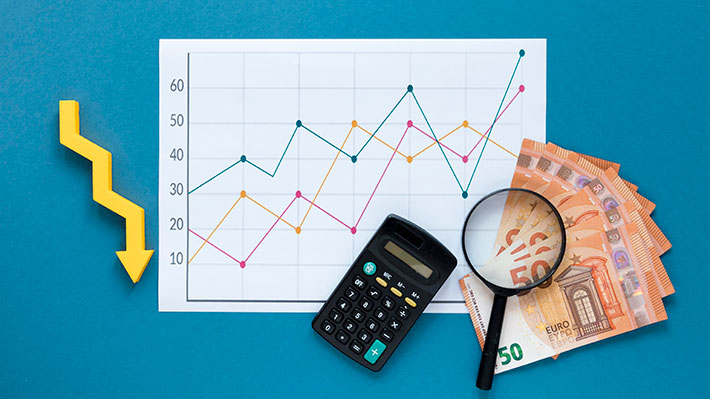
As soon as you enter into a relationship, you can research the customer and his financial situation to assess his solvency. For example, you can consult their annual accounts. From these documents, you can calculate several indicators such as :
- Gearing, which determines the ratio of debt to equity;
- EBITDA, which measures the financial profitability of a company’s operating cycle;
- the general solvency ratio, which determines the company’s ability to pay its debts using its assets;
- etc.
In addition to this external information, you can also use the data collected on the customer during the course of your business relationship to assess the risk he represents to the company. Analyzing the customer’s payment behavior provides you with valuable information. In particular, you’ll be able to calculate the DSO, i.e. the customer’s average payment delay.
For example, if a customer’s DSO is getting longer, it’s a good idea to look into the causes of this change and check that the customer isn’t having trouble paying you. Depending on the answers provided, it may be necessary to review the customer’s payment terms, and in particular the contractual payment period granted.
Implement a customer risk management strategy
Preventing customer risk remains the best way to avoid negative repercussions on a company’s cash flow. To achieve this, customer risk management must take the form of a real strategy, applied across all the company’s departments.
 After analyzing the risk, it is therefore necessary to set up a billing policy that adapts to the profile of each customer. For example, for the riskiest customers, the payment terms granted will be shorter than for customers whose payment profile does not indicate any particular risk. It can therefore be very useful to set up a customer scoring tool to determine the profile of each customer and segment your customer portfolio according to the score obtained.
This type of practice enables us to manage customer risk effectively, while preserving our business relationships with our customers. The idea is not to exclude a customer as a matter of principle, but to adapt the conditions of your collaboration according to the risk they represent.
On the other hand, implementing a customer risk management strategy implies having a well-established debt collection process in place. Before resorting to legal collection techniques, it is often preferable to rely on amicable collection. Personalized relations play an important role here. Indeed, reminders tailored to the customer’s current situation and history with the company are more likely to result in prompt payment.
Finally, the key to successful customer risk management is the involvement of all sales, accounting and financial teams. To achieve this, it is essential to instill a genuine cash culture within the company, and to train employees in best practices.

Customer risk management tools
Finally, customer risk management also requires the implementation of specific tools. These include
- external indicators to assess creditworthiness ;
- scoring tools to assess customer risk
- customer data platforms to get to know your customers better;
- dashboards provided by your collection software;
- alert systems that provide real-time notification of late payments;
- automations to create collection scenarios in the event of non-payment.
Collection software that includes these functions, like Cash On Time, gives you better control over customer risk, while saving your teams time.
Conclusion
Customer risk management is an issue that companies large and small cannot ignore. To successfully manage customer risk in a constantly changing environment, it is essential to adopt a real strategy. The effectiveness of a customer risk management strategy depends primarily on the methods employed and the customer risk management tools put in place.
