

Key takeaways
- Dispute management is a key factor in customer satisfaction and cash flow, as a poorly handled dispute significantly increases the risk of non-payment.
- It is based on a structured process (identification, information gathering, analysis, solution) with clearly defined roles, systematic documentation, and specific turnaround times.
- Adopting best practices such as proactive planning, clear deadlines, administrative rigor, cross-departmental collaboration, and a high level of responsiveness helps reduce the duration and cost of disputes
- Digitization through a credit management/order-to-cash solution centralizes dispute resolution, automates alerts, provides KPIs, and helps speed up collections.
- Digitization through a credit management/order-to-cash solution enables you to centralize dispute resolution, automate alerts and tasks, track specific KPIs, and speed up collections.
- The credit manager oversees the entire system, coordinates teams, establishes procedures, and turns dispute resolution into a key driver of performance and customer loyalty.
Disputes management plays a critical role in customer satisfaction and cash flow management. Indeed, an unsatisfied customer whose complaint is ignored poses a significant risk of non-payment.
In practical terms, dispute management is an administrative process designed to handle customer complaints quickly and efficiently, in order to minimize the risk of payment hold-ups and, consequently, unpaid invoices. Customer complaints may relate to billing errors, quality issues, or missed delivery deadlines, among other things.
Effective management of customer disputes therefore ensures prompt payment of invoices. This plays a major role in optimizing the collection cycle while strengthening customer confidence in the company. It is therefore a best practice in accounts receivable management.
What is dispute management, and what are its objectives?
Dispute management involves handling customer complaints. This includes everything from identifying customer dissatisfaction to resolving the issue, which may sometimes involve negotiations.
Among the most common customer disputes are errors and omissions on invoices, non-conformity of products or services provided, delivery delays, and so on. It is necessary to tailor the point of contact and the procedure to each type of complaint.
 The goal of dispute management is twofold. On the one hand, it aims to ensure customer satisfaction in order to maintain the business relationship. On the other hand, it aims to prevent the customer from withholding payment of the invoice, which could result in a delinquent account.
It’s important to keep in mind that resolving a dispute quickly builds customer trust and can even increase customer satisfaction.
What are the key processes and steps in dispute management?
Effective dispute resolution requires the implementation of a structured process. This begins with defining a clear sequence of steps to be followed in order, such as
- description of the dispute;
- gathering information and evidence;
- analysis;
- proposal for a solution.
Every step of the dispute resolution process must be documented to ensure traceability and efficiency. This can be particularly useful if the dispute goes to court.
A good dispute resolution process assigns a specific role to each team member. A single point person should be designated for each dispute. For example, this could be the sales administration manager, the logistics manager, or the quality manager, depending on the type of dispute. Response deadlines should also be established and adhered to at each stage

Collaboration among all departments involved in the dispute is a key factor in ensuring efficiency that should not be overlooked. It is essential to involve all relevant departments (sales, billing, quality, logistics, legal, etc.) as soon as the dispute is reported. Next, the actions of each department must be coordinated so that everyone knows when and how to act. The Credit Manager or CFO is responsible for coordinating the handling of disputes.
Finally, an effective dispute management process involves monitoring and overseeing the handling of complaints. You need to log all communications, update the dispute status in the customer complaint management tool, set up a dashboard, and track the most relevant performance indicators (KPIs) in this area, such as DSO, average resolution time, and the percentage of recurring disputes. This is what will allow you to measure the effectiveness of the process in place and improve it as needed.
6 Best Practices for Managing Disputes
Effective dispute management doesn’t happen by chance. To get the most out of it, you need to adopt these six best practices:
- Proactive management and prevention. This involves sending customer reminders before the invoice due date to identify potential disputes as early as possible, thereby safeguarding cash flow and improving customer communication.
-
Establishing clear deadlines. The dispute resolution process must include specific processing deadlines tailored to each type of dispute, particularly based on their complexity. It is also important to adhere to these deadlines. Indeed, the longer a dispute lasts, the more costly it is for the company. Added to this is compliance with Service Level Agreements (SLAs) that is, delegation levels for dispute management to accelerate their resolution.
- Commitment to administrative rigor. This involves ensuring the quality of documents issued by the company, whether they are legal notices, terms and conditions of sale, or invoices. This helps reduce the likelihood of customer disputes.
- Collaboration. By promoting information sharing among all relevant departments and using collaborative tools (ticket sharing, task management), everyone knows what they need to do and at what stage of the dispute resolution process
- Responsiveness. Addressing each complaint as soon as it is received not only shows the customer that their concerns are being taken seriously, but also helps find a solution quickly. The more responsive the team is whether by providing a prompt reply or offering a temporary solution the more reassured the customer will feel, and the more effectively the issue can be resolved.
- Amicable solutions. It is often preferable to prioritize dialogue and compromise. In particular, it is possible to negotiate a credit note, a goodwill gesture, or a payment plan, rather than initiating burdensome legal proceedings such as judicial debt collection. Furthermore, this approach avoids legal escalation and protects the company’s reputation.
Litigation management: tools and digitalization
The procedures put in place are not the only factor ensuring effective conflict management. The tools adopted are also crucial. It is particularly useful to implement a credit management or order-to-cash solution that centralizes dispute resolution. This type of solution can be integrated with the existing ERP or CRM system to generate claim tickets, assign tasks, and track actions as they occur. This approach also aligns with the benefits of digitizing collections, as centralized and automated dispute management directly helps accelerate collections and reduce payment delays.
Regardless of the solution chosen, it must include a collaborative portal. Indeed, the dispute management tool implemented within the company must provide a shared space accessible to all stakeholders, such as the credit manager, customer service, sales, collections, and so on. This provides a real-time view of the dispute’s status. Everyone knows where the case stands and can take action if necessary.
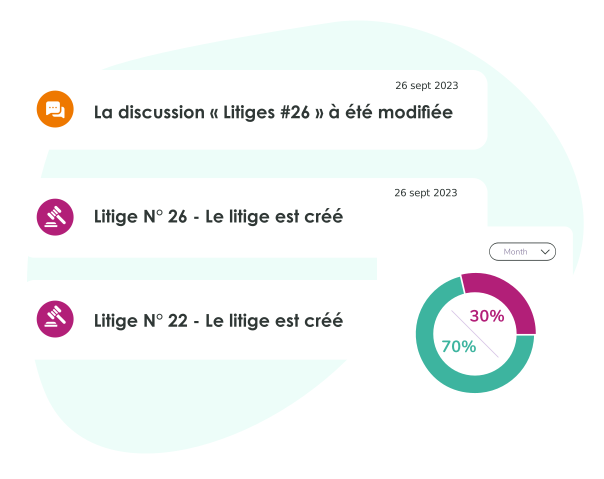
Furthermore, automation and alerts are key assets for effective and reliable dispute management. For example, order-to-cash software allows you to set up email or SMS notifications for employees responsible for resolving disputes. They are notified when a new ticket requiring their attention is opened, when processing deadlines are exceeded, and at every critical stage of the dispute. For example, integrating such a solution with CRM or ERP systems can immediately trigger a dispute when an anomaly is detected during payment follow-up.
Finally, your tool should include a dashboard that provides easy access to key performance indicators (KPIs) for the dispute management process, such as the percentage of disputed invoices, the average resolution time, and the amount of funds on hold. This also involves automated reporting to monitor these metrics and adjust the process accordingly.
EXPLORE OUR LITIGATION MANAGEMENT SOLUTION
What is the strategic role of the Credit Manager in dispute resolution?
The credit manager plays a central role in the risk management process. In fact, he or she oversees the cross-functional coordination of dispute resolution. As a true leader, the credit manager establishes a common methodology and ensures its proper implementation. He or she defines the standardized procedures to be followed (SLAs, dispute classification) and ensures that teams are trained in these best practices.
 The goal is to resolve each dispute quickly. To achieve this, the credit manager organizes regular meetings to maintain communication with the teams and promote consistent practices. He or she may also establish mechanisms such as a dispute committee or monthly reviews to provide updates on ongoing cases
It is also the credit manager’s responsibility to gather input from the various departments that may be at the root of a dispute or involved in its resolution. These include, in particular, the sales department, the logistics department, the customer service department, and the finance department. The credit manager works to foster cooperation so that everyone works toward customer satisfaction.
Their role also involves reviewing the data at their disposal and analyzing KPIs in order to draw conclusions that will lead to continuous improvements in the dispute management process.
In short, the credit manager turns dispute resolution into a driver of performance and customer loyalty.
Conclusion
Dispute management plays a pivotal role in the customer lifecycle. It is a key driver for both improving customer satisfaction and effectively managing cash flow. For optimal dispute management, it is essential to implement a structured process and adopt best practices such as proactive planning, meeting deadlines, internal collaboration, and responsiveness. Equipping yourself with specialized digital tools that provide access to a comprehensive dashboard, among other features, helps accelerate dispute resolution and makes it easier to manage operations. Finally, the credit manager plays a central role in this process, as they coordinate actions to ensure that the entire company understands the strategic importance of dispute management.
If you’d like to learn how our solution can help you manage your inventory, please contact us.
Q&A
What are the different types of disputes?
There are various types of disputes between a company and its customers:
- financial disputes involving unpaid invoices;
- operational issues that lead to customer dissatisfaction (delays, incorrect items received, defects, etc.)
- external disputes that expose the company to competition or to circumstances beyond its control but that affect its customer relationships
What is the maximum response time for a customer complaint?
As a business, the timeframe for responding to a customer complaint must be reasonable. Generally, it should not exceed two months.
What are the 4 steps in the claims handling process?
The four main steps in the customer complaint handling process are:
- proposal for corrective action;
- set a realistic deadline;
- take concrete action;
- inform the customer.
What is the connection between dispute resolution and debt collection?
In the event of a dispute with a service provider or supplier, a customer may decide not to pay all or part of an invoice in order to negotiate a goodwill gesture from the company or, at the very least, a response from it. Consequently, effective dispute management reduces the risk of unpaid invoices, and vice versa.
