
Key takeaways
- Structured, real-time tracking : Electronic invoicing provides timestamped traceability for every step (issuance, receipt, validation, payment), replacing the uncertainties of email with reliable, immediately usable data.
- Early detection of issues : Blockages and errors are flagged upstream rather than after a missed payment, enabling quick intervention before cash flow is affected and reducing DSO.
- More relevant, automated customer reminders : Reminders are triggered by objective criteria (the invoice’s actual status) rather than fixed deadlines, eliminating premature reminders and targeting only where necessary.
- Fewer disputes and more secure collections : Digitisation eliminates ‘lost’ invoices and improves integration with financial tools (ERP, cash flow forecasting), ensuring more reliable data and faster payments.
- A 2026 mandate = a competitive opportunity : From 1 September 2026, all companies must be able to receive electronic invoices (and large companies/ETIs must issue them). Anticipating this transition allows you to rethink the Order-to-Cash cycle for real operational advantage.
Accounts receivable management remains a critical challenge for company cash flow. Payment delays, invoices pending, undetected disputes: these situations directly affect cash flow and tie up significant internal resources.
With the reform taking effect in September 2026, the electronic invoicing is no longer just about regulatory compliance. It paves the way for genuine management of the receivables ledger, providing structured visibility into every stage of the billing cycle. Its impact on the Invoice to Cash cycle therefore goes far beyond administrative matters.
So the question is: how does this move to digitisation concretely change the receivables tracking?
How does electronic invoicing provide real-time traceability that transforms the Order-to-Cash cycle?
Electronic invoicing transforms the Order-to-Cash cycle because it introduces a structured, timestamped and much clearer tracking of every step in the billing cycle.
Standardised statuses for more granular tracking
Electronic invoicing introduces a timestamped tracking of every stage of the billing cycle. Issuance, transmission, receipt, acceptance, rejection, payment processing : each status is recorded via structured formats (CHORUSPRO, Factur-X, UBL) and is automatically reported by the approved platforms (PA).
Finance and collections teams then have a clear view. They know whether an invoice has been received, is stuck in validation, or is already being paid. This level of detail changes the game compared with a standard email sending, where lack of feedback left room for doubt.
Earlier detection of anomalies
 This continuous stream of information enables the identification of blockages before the due date. A data error, an administrative rejection, or a validation delay are no longer discovered weeks after the fact. They are flagged early, giving time to correct them and act before cash flow is affected.
In practice, this contributes to reducing DSO (average payment period) : teams no longer wait for a default to intervene.
Fewer disputes, more secure customer payments
Digitisation also reduces ‘lost’ invoices and disputes related to non-receipt. In a structured process, the question is no longer whether the invoice was sent, but at what exact status it has on the customer’s side.
This traceability also eases integration with financial control tools : ERP, accounts receivable management software, and cash flow forecasting solutions. The data on customer collections surfaces faster, is more reliable and feeds directly into the Customer Ledger and cash flow forecasting.
How does electronic invoicing automate and make customer reminders more reliable?
Electronic invoicing fundamentally changes the customer reminder process by shifting from fixed-deadline workflows to management driven by reliable, continuously updated information.
Reminders triggered by real data
In a traditional setup, reminders are triggered based on the due date, without considering how the invoice is actually being processed on the customer’s side. This approach often results in actions that are out of sync with the actual situation.
With electronic invoicing, each invoice is associated with a specific status. A reminder can therefore be sent only when the invoice is accepted but unpaid, rather than simply because a deadline has passed. Payment tracking becomes more relevant and teams focus their efforts where they are truly needed.
More targeted workflow scenarios
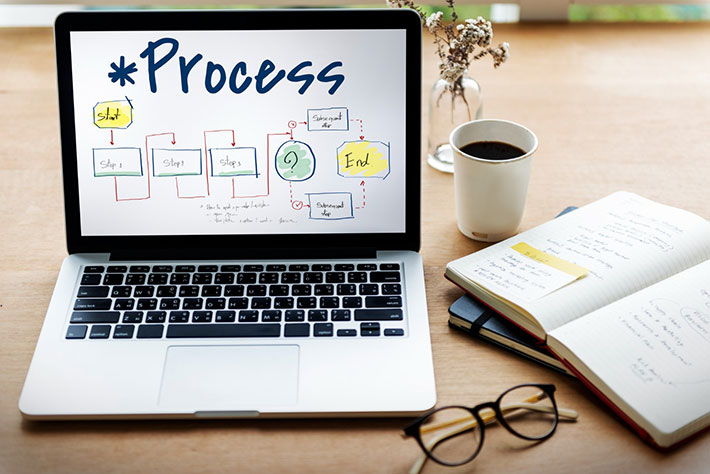 The granularity of statuses makes it possible to structure tailored reminder scenarios. Depending on the debtor’s profile, payment history, and the amount involved, companies can define differentiated sequences: a reminder at J+5 for usually reliable clients, stronger action at J+15 or J+30 for higher-risk profiles.
Automation here relies on a combination of objective criteria, bringing both consistency and time savings.
End of premature reminders
One of the most immediate benefits is the elimination of inappropriate reminders. Contacting a customer whose invoice was never received, or whose payment is already in progress, harms the business relationship without advancing collections.
With the visibility provided by statuses, a rejected invoice triggers a correction, an invoice in validation is simply monitored, and an invoice in payment is not subject to aggressive follow-up.
Electronic invoicing and the 2026 legal requirement: anticipate to turn it into a competitive advantage
The electronic invoicing reform is now entering a very concrete phase for French companies.
The reform timetable
 From 1 September 2026, all companies must be able to receive electronic invoices via an approved platform. On the same date, large companies and ETIs will also have to issue their invoices electronically. SMEs and micro-enterprises will have an additional period until 1 September 2027.
Choose a suitable approved platform
An approved platform (PA) is an operator registered by the State, authorized to issue, transmit and receive electronic invoices. The choice of platform directly determines the quality of tracking.
The most relevant selection criteria focus on :
- interoperability with existing tools (ERP, business software),
- the quality of the data provided,
- and the ability to use this information for managing accounts receivable.
Redesign the Invoice to Cash cycle
The issue is not limited to compliance. Companies that anticipate the reform can use it as an opportunity to review their billing processes, clarify approval workflows, structure reminders and improve cash management. In short, completely redesign their Invoice to Cash cycle.
Conversely, those who wait until the last minute risk focusing only on the ability to issue or receive compliant invoices, without deriving operational benefit.
CashOnTime is a comprehensive platform for automating the Invoice-to-Cash cycle. If you are considering automation, contact our experts to share your challenges and discover how we can support you.
An expected ROI across three areas
Return on investment (ROI) depends on each organisation’s level of maturity. However, three clear benefits emerge:
- the reduction in DSO thanks to faster invoice processing,
- the fewer unpaid invoices and disputes through more reliable data,
- and a gain in accounting productivity with fewer manual entries and smoother exchanges.
Conclusion
Electronic invoicing gives finance departments and Credit Managers an unprecedented level of visibility into the billing cycle. The receivables ledger is no longer based on partial or outdated information, but on structured, up-to-date data that can be used at each stage.
The 2026 deadline represents a concrete opportunity: to rethink Order-to-Cash processes to sustainably reduce DSO, secure collections and strengthen operational performance. Companies that seize this opportunity now will gain a real advantage in both operational efficiency and cash flow control.
